Borders & EnforcementEntry PF-872288 · Page 17 · Stamped NOV 14, 2026
Eurotunnel to Trial Drive-Through EES Biometric Kiosks After EU Deal
The European Commission has authorised Eurotunnel to trial 120 camera-supervised drive-through biometric kiosks in Folkestone and Calais, sparing British drivers a two-year EES headache.
- Programme
- Borders & Enforcement
- Filed
- Reading
- 3 min
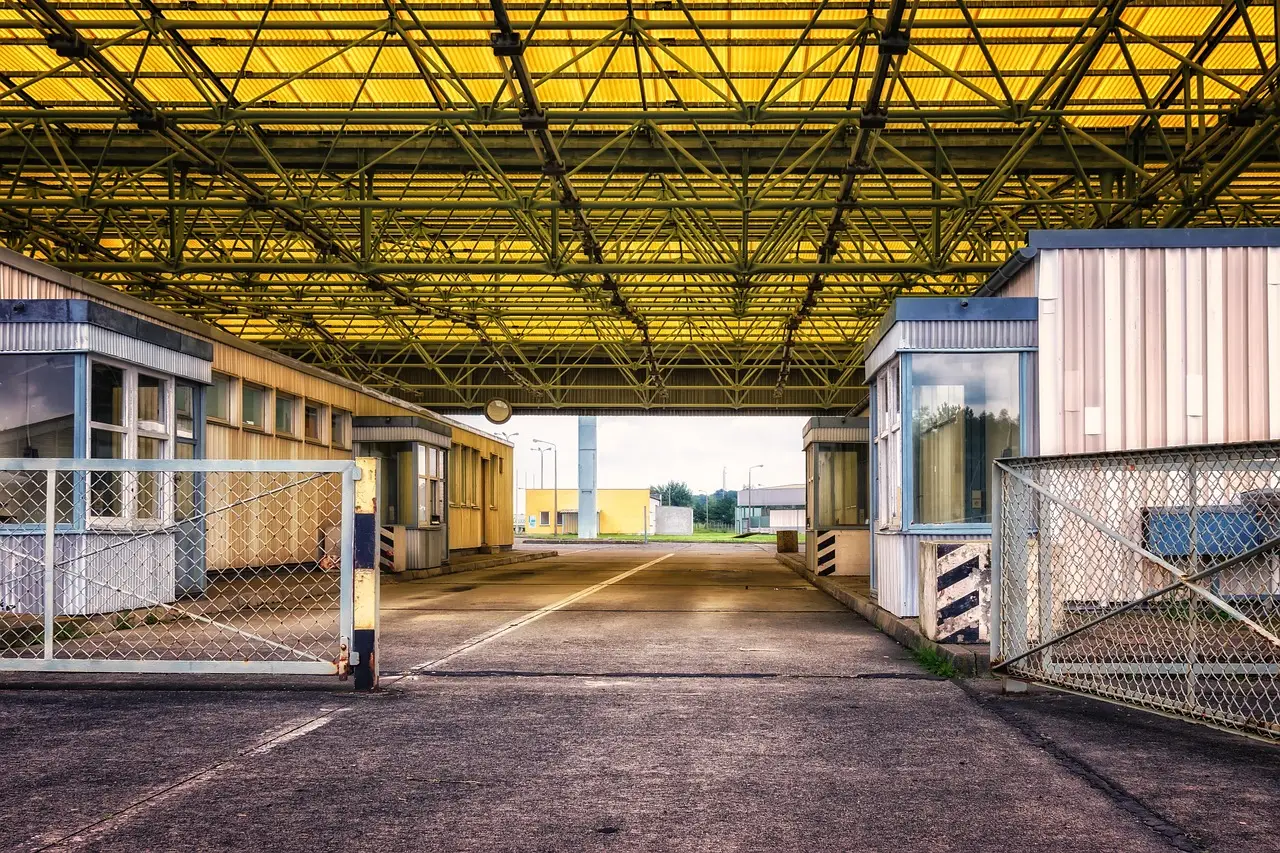
Entry details
- 120 drive-through biometric kiosks are installed across Folkestone and Calais under an EU-authorised two-year trial.
- EES was due to launch EU-wide on 9 September, but 9 of 27 member states, including France, have not fully deployed it.
- Each kiosk has two stands per vehicle to read passports and capture fingerprints and facial images.
- Leriche will present a 40-page proposal to UK and French authorities for an 'intelligent border' laboratory.
- No start date is set; the kiosks work but lack a functioning connection to the French system.
The European Commission has authorised Eurotunnel to trial "eagle-eye" camera-supervised biometric kiosks at Folkestone and Calais, ending a standoff over how to take fingerprints from British drivers without miles-long tailbacks. Both sides are now equipped with 120 drive-through kiosks, and the trial will last two years.
What changes at the border?
Holidaymakers and business travellers will no longer leave their cars to submit fingerprints and facial images at a terminal building. Instead, each vehicle will pull up to an individual kiosk with two stands per car, which will read passports and capture fingerprints and facial images while police monitor the eagle-eye cameras remotely. Yann Leriche, chief executive of Getlink, the Eurotunnel owner, said the model replicates e-gates at airports, where officers are not physically present at each gate.
The system already operates at airports in Rome and Paris. Leriche said Getlink drew further inspiration from visits to US-Mexico border controls, where drivers and passengers remain in their cars throughout inspection.
Why the change was needed
The EU's Entry and Exit System (EES) requires all third-country citizens, including British passport holders, to submit fingerprints and facial images when entering and leaving the Schengen area. The scheme was due to go live across the EU on 9 September, but nine of the 27 member states, including France, have still not fully deployed it because of technical problems.
Eurotunnel has long flagged the system as a logistical risk. Getlink originally planned to hand tablets to passengers in their cars for self-fingerprinting, and also studied a model requiring passengers to park and enter the terminal. Both designs demanded a police officer physically present for every first-time fingerprinting — a rule intended as a safeguard against subfuge, such as a criminal using a fellow passenger with a "clean skin" fingerprint.
Leriche said Getlink warned the authorities directly: "We told the authorities: it is going to be a mess. Many people are going to the wrong place and you can't have police jumping from one place to the next to solve the issues." He added that customers would have suffered, "particularly at peak time".
What happens next?
In the coming weeks, Leriche will meet UK and French authorities and present a 40-page proposal to turn Eurotunnel into a "laboratory" for an "intelligent border" built on emerging technology and lessons from the US and Singapore. He said that after "many, many discussions" with the European Commission and French authorities, the parties were "authorised" to trial the eagle-eye cameras and that "the French authorities are also on board because for them it is more efficient".
"It will prevent the chaos in the long term and the short term and if the experiment works, as hopefully it will, then it will become permanent," Leriche said. Eurotunnel hopes the two-year trial becomes the permanent system; that decision, however, belongs to the authorities, not the operator.
What remains unresolved?
No start date exists. Leriche said he did not know when France will introduce the system: "It has been delayed and delayed and delayed, but our kiosks are there, they can function but the connection with the French system is still not working." Separately, the EU has filed a lawsuit against IBM and two other companies involved in implementing EES — a signal that the programme's technical foundations remain contested even as its hardware rises at the Channel.
via theguardian.com (Source)
More from Olivia Hart
Show full bio
Senior reporter covering regulation, policy and their impact on Immigration and mobility policy worldwide at Passport File.
365 articles