Borders & EnforcementEntry PF-246888 · Page 09 · Stamped OCT 10, 2026
Italy Denies Targeting Spain as EU Ministers Close Ranks After Ceuta Crisis
Italy says its one-month checks on arrivals from Spain target no partner, as EU ministers agree to end the Ceuta standoff and pursue a joint deterrence plan.
- Programme
- Borders & Enforcement
- Filed
- Reading
- 3 min
Entry details
- Italy imposed one-month border checks on arrivals from Spain at sea and air borders after some 60,000 Moroccans entered Ceuta.
- Interior Minister Matteo Piantedosi said the measure is "in no way" directed against Spain.
- 70,000 of the 72,000 people who entered Ceuta have returned to Morocco, Madrid said.
- Most EU governments still oppose Spain's plan to regularise some 500,000 undocumented immigrants.
- The EU returns to the file at an informal home affairs ministers' meeting and European Council in October.
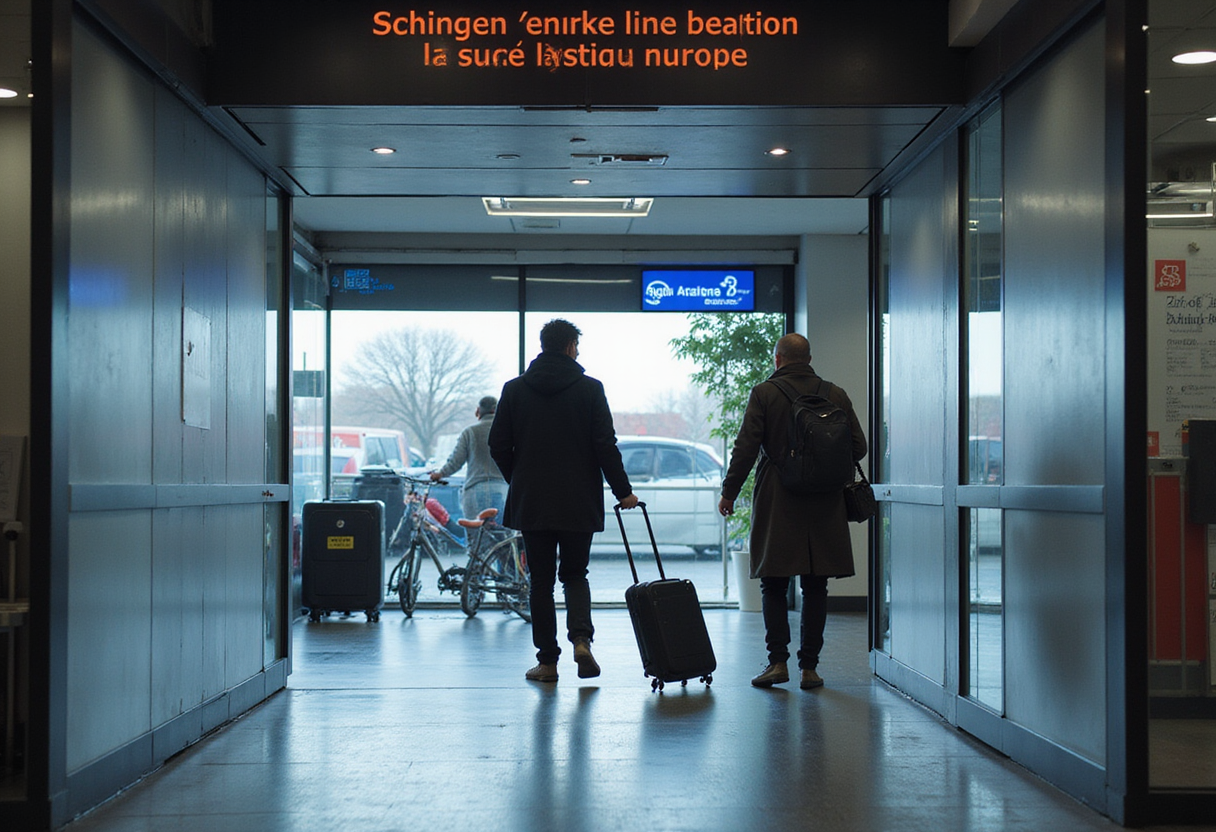
Italy's one-month border checks on arrivals from Spain are "in no way" aimed at Madrid, Italian Interior Minister Matteo Piantedosi told fellow EU ministers on Tuesday, as the bloc moved to defuse its sharpest Schengen dispute since the Ceuta migration crisis began.
"This is in no way a measure directed against Spain or any other partner," Piantedosi said at the online meeting of EU interior ministers, according to remarks shared with journalists. The controls, introduced at Italy's sea and air borders, are set to last one month.
Rome introduced the checks after some 60,000 Moroccans crossed into the Spanish enclave of Ceuta last week. Giorgia Meloni's government, backed by Denmark and 20 other countries, blamed Madrid for creating a pull factor with its pro-migration policies — criticism Piantedosi pointedly declined to repeat at Tuesday's meeting.
What did Italy say in its defence?
The Italian interior minister argued the temporary checks are legal and noted that other countries have frequently imposed their own internal border controls inside the Schengen area. He also cast Italy as a historical victim of the EU's lopsided burden-sharing on migration, pointing to the Lampedusa crisis of 2023.
Rather than renewing attacks on Spain, Piantedosi used his speech to promote Italy's strategy of outsourcing asylum claims to non-EU countries, including Albania.
At a press conference after the meeting, Spanish Interior Minister Fernando Grande-Marlaska said he hoped Italy would reverse the temporary border controls. The countries most critical of Madrid last week "have reconsidered," he said, describing the tone of the meeting as constructive and insisting there was never the slightest risk to the integrity of the Schengen zone.
How many migrants have returned?
Grande-Marlaska gave the meeting's most concrete figure: 70,000 of the 72,000 people who entered Ceuta have now returned to Morocco. Several ministers and diplomats praised the speed of those returns.
Denmark, which had also hammered Spain over the crisis, struck a similarly conciliatory note. "I am very satisfied that Spain acted quickly," Integration Minister Morten Bødskov said in a statement after the meeting.
No minister called for Spain's suspension from the Schengen area, according to two diplomats present.
Where does the regularisation row stand?
Despite the easing of tensions, most EU governments still oppose Pedro Sánchez's plan to regularise some 500,000 immigrants living in Spain without the required paperwork. They argue the plan encouraged migrants to cross into Ceuta.
European Commissioner for Migration Magnus Brunner told journalists he understood Italy's reaction, noting that citizens were concerned about the influx from Morocco. "By every measure, Europe has not had this much control over illegal migration in decades," he said.
What happens next?
Ministers converged around the action plan outlined in a letter European Commission President Ursula von der Leyen sent to Sánchez on Monday.
"There was a common understanding of the need to continue relentlessly fighting migrant smuggling networks, to reinforce returns, to strengthen EU borders, to build deep partnerships with third countries, and to improve foresight," said Jim O'Callaghan, Ireland's home affairs and migration minister, who chaired the videoconference.
Before the Ceuta crisis, the European Commission was already planning to put forward measures in September to strengthen Frontex, the EU border agency — which was not called upon during last week's events.
Belgian Prime Minister Bart De Wever called for an emergency meeting of EU leaders on the root causes of the Ceuta drama in an interview with Belga, but two EU officials said such a summit was unlikely.
The EU will return to the issue at an informal meeting of home affairs ministers in October, and at the next European Council that same month.
via rapporteur.com (Original)
More from Nathan Brooks
Show full bio
Correspondent covering marketplaces and e-commerce at Passport File.
271 articles