Residence & CitizenshipEntry PF-908605 · Page 46 · Stamped OCT 10, 2026
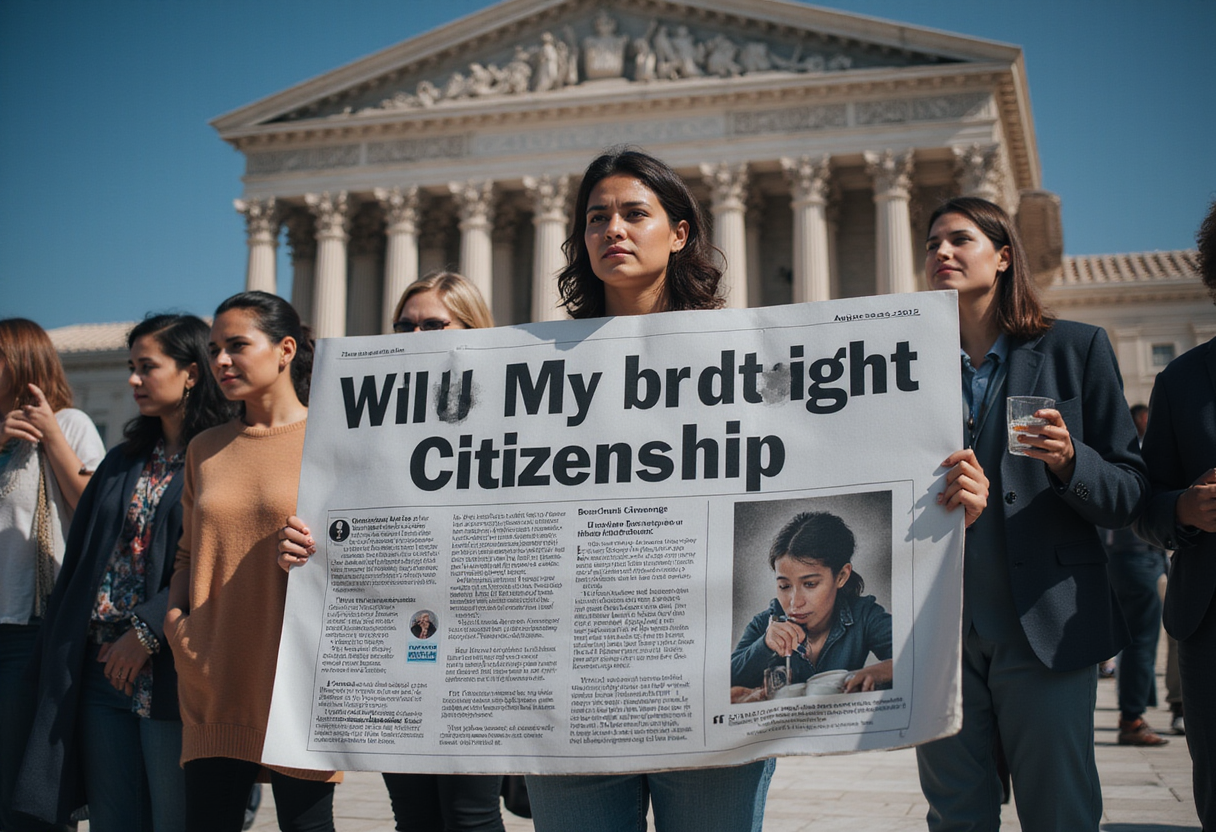
Supreme Court Weighs Trump Bid to Narrow Birthright Citizenship
The US Supreme Court is reviewing a Trump-era executive order that would narrow birthright citizenship under the 14th Amendment, with a decision expected by June 2025 that could affect hundreds of thousands of newborns each year.
- Programme
- Residence & Citizenship
- Filed
- Reading
- 3 min
Entry details
- The 14th Amendment's Citizenship Clause was ratified on July 9, 1868.
- The US Supreme Court is expected to rule on the executive order by late June 2025.
- The order would deny automatic citizenship to US-born children of mothers on temporary visas or in unauthorized status.
- Roughly 1 in 12 US newborns has at least one non-citizen parent.
- Lower-court injunctions currently block the order from taking effect nationwide.
The US Supreme Court is weighing a Trump administration executive order that would narrow birthright citizenship protections guaranteed under the 14th Amendment to the US Constitution.
The court accepted the case during its 2024-2025 term. A decision is expected by the end of June 2025. The ruling will determine whether the executive branch can, by order, redefine a constitutional right that has been settled doctrine for more than 150 years.
What birthright citizenship currently guarantees
The Citizenship Clause of the 14th Amendment, ratified in 1868, states that "all persons born or naturalized in the United States, and subject to the jurisdiction thereof, are citizens of the United States."
Federal courts have read that language consistently to grant citizenship to nearly every child born on US soil. The narrow exceptions include:
- Children of foreign diplomats posted in the US
- Children of foreign military occupiers
- Children of foreign sovereigns and their staff
This doctrine, known as jus soli (right of the soil), distinguishes the United States from most peer democracies, which grant citizenship by descent rather than by birthplace.
What the executive order changes
The Trump order, signed in the opening weeks of his second term, instructs federal agencies to reinterpret the phrase "subject to the jurisdiction thereof." Under the new reading, US-born children would not receive automatic citizenship if their mothers were in the country on:
- Tourist or student visas (B-1, B-2, F-1, M-1)
- Temporary work visas (H-1B, H-2A, H-2B, L-1)
- Unauthorized status at the time of birth
Fathers' status is not addressed in the order. Children born to US-citizen fathers would still qualify, regardless of the mother's immigration status.
Who is affected
Roughly 1 in 12 newborns in the United States has at least one non-citizen parent. Industry estimates place the annual count in the hundreds of thousands.
If the order takes effect, affected children would not be eligible for:
- US passports at birth
- Social Security numbers
- Federal student aid
- Sponsorship of parents for permanent residence
Many could become lawfully present but stateless, holding no recognized nationality from any country.
What the justices are examining
The Supreme Court has consolidated at least three separate challenges, brought by states, immigrant rights organizations, and individual plaintiffs. The court is weighing three distinct legal questions:
- Does the executive order contradict the plain text of the 14th Amendment?
- Did lower courts overreach by blocking the order nationwide?
- Does the President have authority to redefine citizenship by executive action?
The third question is the one with the widest reach. A ruling that the President can set citizenship rules by fiat would reshape immigration enforcement across many other categories, not just birthright.
What changes for immigrants now
Until the Supreme Court issues its ruling, the executive order remains blocked by lower-court injunctions. Birthright citizenship rules are unchanged in practice.
State vital-records offices continue to issue birth certificates to all children born on US soil. Federal agencies continue to recognize those children as US citizens by birth.
Applicants should not alter filings, claims, or sponsorship strategies based on a pending case. The outcome will be published on the Supreme Court docket.
Where to follow the case
Filings, oral argument transcripts, and the final opinion are available through the Supreme Court of the United States at supremecourt.gov. Consolidated docket numbers are listed under the lead case, Trump v. CASA, Inc.
via GN Citizenship Law (Source)
More from Olivia Hart
Show full bio
Senior reporter covering marketplaces and e-commerce at Passport File.
248 articles