Migration DataEntry PF-802310 · Page 23 · Stamped SEP 30, 2026
US Immigration Slowdown Will Cut Startup Numbers for Decades
Yale Budget Lab projects the post-2025 US immigration slowdown will mean up to 16,000 fewer startups per year and a lasting drag on productivity through 2075.
- Programme
- Migration Data
- Filed
- Reading
- 4 min
Entry details
- Cumulative net-immigration shortfall of 3.4 million (EVW High) to 5.9 million (EVW Low) people over 2025-2028 relative to the CBO January 2025 baseline, with net migration negative in 2026 under EVW Low.
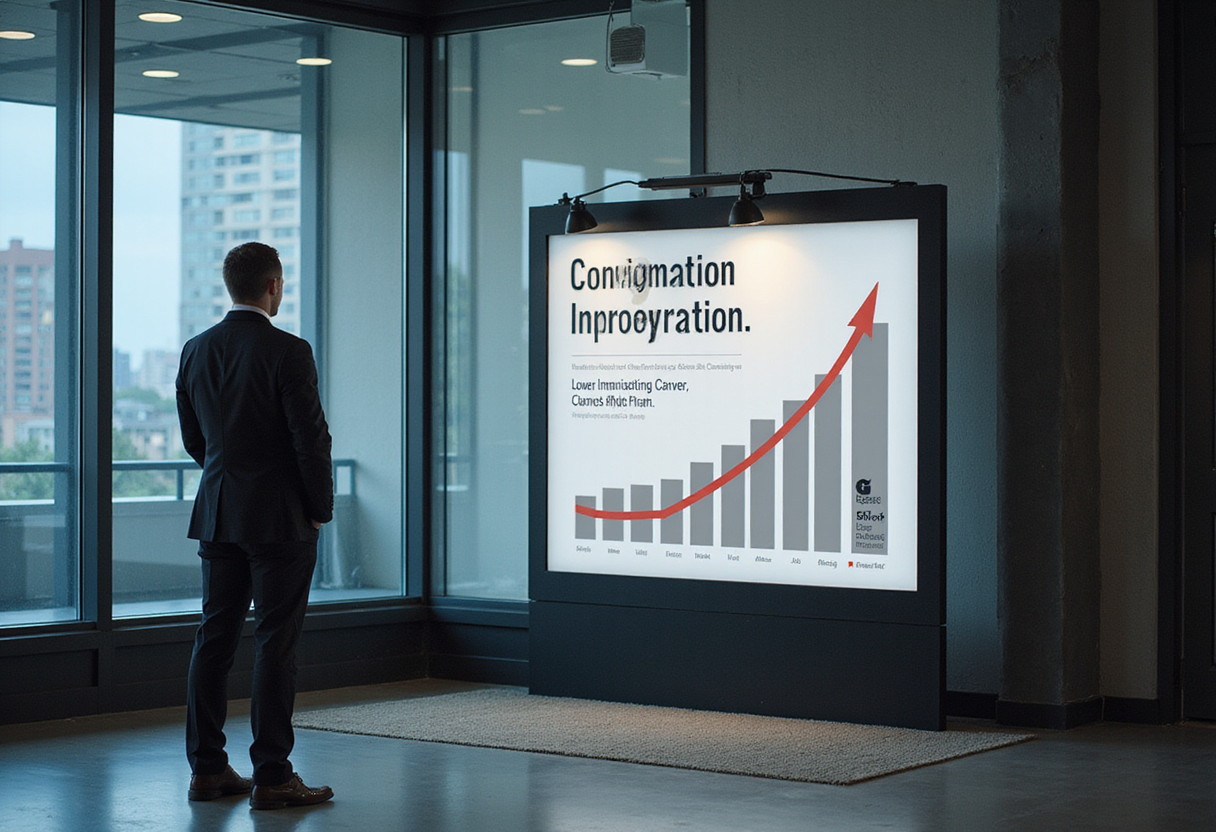
- Missing new employer firms peak at 9,000-16,000 per year in the early 2030s (1.7-3.0% of baseline entry of about 530,000); the gap is still 4,000-6,500 firms per year in 2075.
- Economywide productivity is 0.25-0.44% lower by around 2052 and remains below baseline in 2075; roughly $125-225 billion per year in aggregate terms by 2055.
The immigration restrictions and expanded deportations the Trump administration has implemented since 2025 will reduce new business formation in the United States for decades, even if net migration returns to baseline in 2029. That is the central finding of a new analysis from Yale's Budget Lab, which quantifies a channel that most public debate has overlooked: the supply of entrepreneurs.
The analysis builds on immigration scenarios developed by Edelberg, Veuger, and Watson (EVW). Two scenarios bracket plausible implementations of current enforcement and admission policy. Relative to the Congressional Budget Office's January 2025 baseline of roughly 1-2 million net immigrants per year, the "EVW High" scenario implies a cumulative net-immigration shortfall of about 3.4 million people over 2025-2028, while "EVW Low" implies a shortfall of about 5.9 million. Under EVW Low, net migration turns negative in 2026 — more people leave the country than arrive. Both scenarios assume immigration returns to the CBO baseline from 2029 onward.
Authorized flows account for a substantial share of the shortfall: about 27% under EVW High and 29% under EVW Low, reflecting less visa issuance, fewer refugee admissions, and reduced humanitarian parole alongside lower unauthorized entries and higher enforcement-driven emigration.
Fewer founders, older population
The working-age (25-64) population shortfall peaks in the mid-2030s: about 4.6 million people in 2033 under EVW Low, of which roughly 1.5 million are missing authorized immigrants, and 2.6 million under EVW High, including about 0.8 million missing authorized immigrants.
Three mechanisms then reduce business creation. First, immigrants start businesses more often: Azoulay, Jones, Kim, and Miranda (2022) estimate immigrants are 80% more likely to found an employer firm than native-born Americans. Second, immigrants tend to arrive during the prime founding ages of the 30s and 40s, so their removal shifts the working-age population older. Third, the children never born to missing immigrants cannot found firms later in the century — a missing-births channel that grows steadily and keeps the effects alive long after 2029.
The result is a measurable shortfall in new employer-firm entry — businesses with at least one paid employee. Under EVW Low, about 4,100 fewer employer firms are founded in 2025. The gap grows to a peak of about 16,000 missing firms per year in 2032 and settles at about 6,500 per year by 2075. EVW High follows the same pattern at smaller scale: about 3,300 fewer firms in 2025, a peak of about 8,900 in the early 2030s, and about 3,900 fewer per year by 2075. Against a baseline of roughly 530,000 new employer firms per year in the early 2030s, the peak shortfalls equal about 3.0% and 1.7% of entry.
In 2075, fifty years after the policy shock, annual entry remains about 4,000-6,500 firms (0.7-1.2%) below baseline, driven primarily by missing native-born descendants of missing immigrants.
Productivity drag
Young firms account for a disproportionate share of productivity growth, so fewer startups translate into a lasting productivity gap. The cumulative shortfall peaks around 2052. Under EVW Low, the level gap reaches about 0.35% by 2040, peaks at about 0.44%, and recedes to about 0.31% by 2075. Under EVW High, the gap reaches about 0.20% by 2040, peaks at about 0.25%, and stands at about 0.18% by 2075. In annual terms, productivity growth runs up to about 2.9 basis points per year below baseline under EVW Low and up to about 1.6 basis points under EVW High, with the largest annual gap around 2030.
As a rough illustration, applying the peak shortfall to CBO's projection of 2055 per-capita income implies an annual loss of about $600 per person under EVW Low and about $350 under EVW High, in 2025 dollars. Across projected 2055 populations of about 375 million and 378 million respectively, that aggregates to roughly $225 billion per year under EVW Low and $125 billion under EVW High.
Authorized flows matter too
A decomposition by founder status shows the productivity cost of reduced authorized immigration is substantial in its own right. Under EVW Low, the missing-authorized channel (-0.32%) becomes nearly as important as the missing-unauthorized channel (-0.43%) by 2055. Under EVW High, the authorized channel is about two-thirds the size of the unauthorized one (-0.17% vs. -0.26%). Public discussion has focused mostly on deportations and unauthorized migration, but cuts to legal channels carry a significant share of the cost.
Sectorally, the unauthorized-channel drag is highly concentrated: construction accounts for about 28% and professional and administrative services about 26% of that channel. The authorized-channel drag spreads more evenly across professional services, entertainment and accommodations, education and healthcare, and retail trade.
The authors caution that these estimates are likely a lower bound. The framework omits the effect of slower labor force growth on demand for new firms and does not quantify the impact of fewer immigrants on idea generation itself.
Readers should consult the official CBO demographic projection and the underlying EVW analysis for the assumptions behind each scenario. This analysis models one channel only and does not constitute legal or policy advice.
via brookings.edu (Original)
More from Priya Raman
Show full bio
Market editor covering industry trends and analytics at Passport File.
127 articles