Borders & EnforcementEntry PF-450861 · Page 30 · Stamped SEP 29, 2026
WOLA Border Update: DHS Shakeup, ICE Custody Abuses, Wall Construction
WOLA's latest U.S.-Mexico border update covers migration data, the partial DHS shutdown and new leadership, abuses in ICE custody, and renewed border wall construction.
- Programme
- Borders & Enforcement
- Filed
- Reading
- 4 min
Entry details
- WOLA's update covers four areas: migration data, the DHS partial shutdown and new management, abuses in ICE custody, and border wall construction.
- DHS leadership changes affect enforcement priorities and processing practice even without formal rule changes.
- The report is a monitoring document, not a policy announcement; official data comes from CBP, ICE and DHS.
The Washington Office on Latin America (WOLA) has published its latest U.S.-Mexico border update, a regular monitoring report that pulls together the most significant developments on the shared frontier. This edition covers four distinct threads: fresh migration data, the partial shutdown and leadership changes at the Department of Homeland Security (DHS), reported abuses of migrants held in U.S. Immigration and Customs Enforcement (ICE) custody, and renewed border wall construction.
What the update reports
WOLA's border updates typically assemble official statistics, field reporting and documented incidents into a single public record. This edition concentrates on the institutional turbulence inside DHS, which sits at the centre of U.S. immigration enforcement.
The report highlights the department's partial shutdown — a government funding lapse that directly affects immigration processing, inspections at ports of entry and the agencies that manage asylum and customs operations. During DHS shutdowns, immigration functions are treated unevenly: some staff continue working because their roles are funded by fees or deemed essential, while other operations slow or pause entirely. Applicants and travellers usually feel the effects through longer waits and reduced services rather than through any formal policy change.
Alongside the shutdown, the update addresses new management at the department. Leadership turnover at DHS matters for migrants and applicants because the secretary and senior officials set enforcement priorities, decide how discretion is applied in individual cases, and direct resources between the border, interior enforcement and the immigration court system. A change at the top can shift practice on the ground well before any regulation is formally amended.
Abuses in ICE custody
The report also documents abuses of people held in ICE custody. Detention conditions have become a recurring subject of oversight: inspections, complaints mechanisms and reporting by advocacy organisations feed into a public record of what happens inside detention facilities. WOLA's update adds these incidents to its running account of the treatment of migrants in U.S. custody.
For readers tracking U.S. immigration, this section matters because custody conditions can affect case outcomes, health and access to counsel. It also feeds the broader policy debate over how much the United States relies on detention as an immigration management tool.
Border wall construction returns
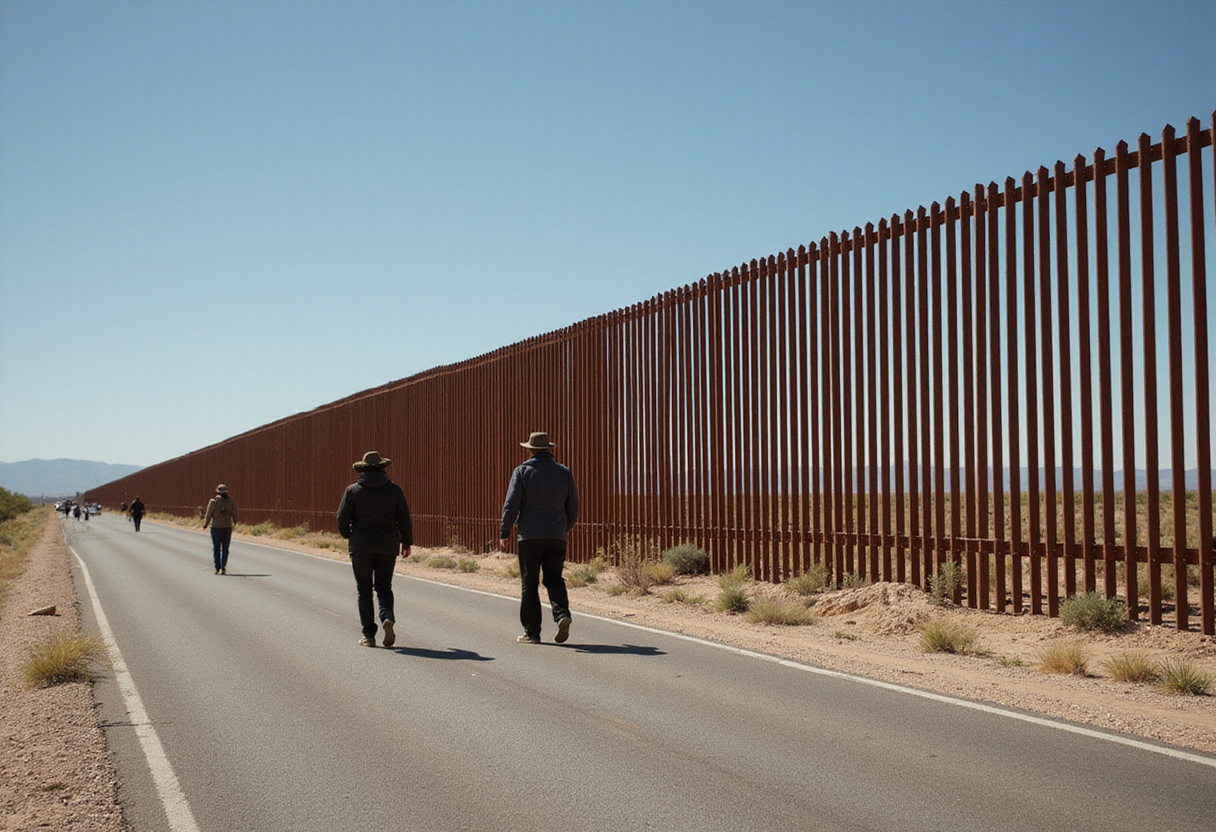
The third enforcement development in the update is border wall construction. Barrier building had slowed in recent years as funding and priorities shifted, and renewed construction signals where the current administration is placing its emphasis: physical infrastructure at the line itself rather than, or in addition to, processing capacity and regional cooperation.
Wall construction intersects with immigration practice in concrete ways. It can redirect crossing routes, push people into more remote and dangerous terrain, and change where border agents are deployed. It does not, by itself, change who is eligible for asylum or any other immigration benefit — those rules are set separately.
Migration data
The update opens from migration data at the border — the monthly figures that show how many people are encountered crossing, from which countries, and how they are processed. These numbers drive policy decisions in Washington and in Mexico City, and they are the reference point for judging whether enforcement measures are working as intended.
Readers comparing reports should note that border statistics are published by U.S. Customs and Border Protection and are revised as encounters are resolved into different outcome categories. WOLA's update works from the official series.
Who this affects
The developments described in the update touch several groups differently:
- People with pending applications or hearings with DHS agencies may face delays tied to the shutdown and to leadership-driven changes in processing priorities.
- Migrants in ICE custody, and their families, are directly affected by the conditions documented in the report.
- Communities and landowners along the construction zones are affected by renewed barrier work.
- Analysts and policymakers use the migration data to judge trends across the corridor.
Where to verify
WOLA publishes its border updates on its website, wola.org, with links to the underlying official data from CBP, ICE and DHS. Readers with active immigration cases should rely on the agencies' own channels — USCIS for applications, ICE for detention matters and the immigration courts for hearings — for case-specific information, since a monitoring report cannot predict how any individual matter will be handled.
This update does not announce a rule change, a quota or a deadline. It is a monitoring document. Its value for Passport File readers lies in the consolidated record it provides of a period in which DHS was simultaneously shut down in part, under new management and under scrutiny over custody conditions — a combination that historically produces slower processing and shifting enforcement practice at the border.
via GN Migration Statistics (Source)
More from Nathan Brooks
Show full bio
Correspondent covering marketplaces and e-commerce at Passport File.
134 articles