Study RoutesEntry PF-140217 · Page 42 · Stamped OCT 10, 2026
Italy: Decree Imposes School Face-Covering Ban and Foreign Pupil Cap
Italy's President has signed a decree banning face coverings in schools and capping the share of foreign pupils per class. Quotas, dates and exemptions sit in the official Gazzetta Ufficiale text.
- Programme
- Study Routes
- Filed
- Reading
- 3 min
Entry details
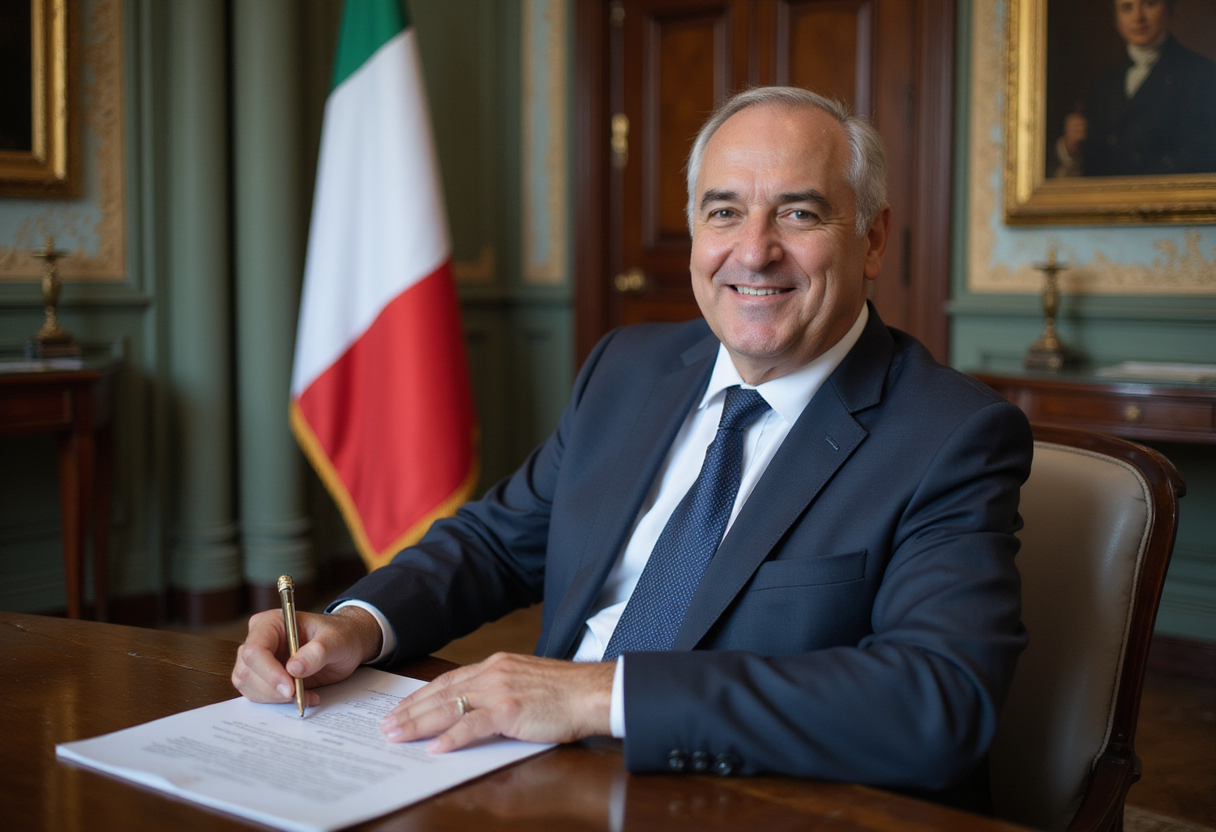
- Italy's President Sergio Mattarella has signed the decree.
- The measure bans face coverings in schools.
- The measure caps the share of foreign pupils that a class may enrol.
- The exact quotas, school levels and effective date sit in the Gazzetta Ufficiale.
- France, Belgium, Bulgaria, Austria and several German Länder have already restricted face coverings in schools.
Italy's President Sergio Mattarella has signed a decree that bans face coverings in schools and caps the share of foreign pupils that classes may enrol, InfoMigrants reports.
The text of the decree contains the binding detail: the percentage or headcount of the foreign-pupil ceiling, the school levels covered, the effective date, and the exceptions. Readers who need the exact figures should consult the official publication in the Gazzetta Ufficiale.
What does the decree contain?
Two provisions sit at the core of the signed measure:
- A ban on face coverings in schools, addressing any garment or item that obscures the face during school activities.
- A cap on foreign pupils in classes, limiting the proportion or number of non-Italian pupils that a class or institution may admit.
The two provisions travel together. One governs appearance inside the classroom; the other governs who enters it.
Who does the decree reach?
The signed text covers a wide circle:
- Pupils in Italian schools, Italian and non-Italian alike.
- School administrators who apply the enrolment cap on admissions and transfers.
- Teachers and non-teaching staff who enforce the face-covering rule.
- Parents of current and prospective students.
What stays in place?
The decree does not, on the face of it, remove the right of foreign children to education in Italy. Compulsory schooling rules continue to apply. The cap functions as a ceiling on class composition, not as a barrier to enrolment in the system as a whole.
Foreign children already enrolled in a class remain there. The cap bites on admissions and transfers, not on the existing school population, unless the implementing acts say otherwise.
What should migration and education desks watch?
The follow-up points are concrete:
- The exact percentage or headcount of the foreign-pupil cap.
- The date the decree enters into force and any transition window for the current school year.
- The school levels covered: infanzia, primaria, secondaria di primo grado, secondaria di secondo grado, or all of them.
- The implementing circulars from the Ministry of Education and Merit.
- The interaction with existing rules on religious accommodation and the right to education.
Where the binding text sits
The authoritative version of the decree is the text published in the Gazzetta Ufficiale, the official journal of the Italian Republic. Anyone quoting a quota, deadline, or exemption from secondary coverage should check it against the Gazzetta Ufficiale text before relying on it for legal, planning, or casework purposes.
How this fits the European picture
Italy is not the first European country to act on face coverings in schools. France, Belgium, Bulgaria, Austria, and several German Länder have all taken steps on the question over the past two decades. The Italian text shares that strand of policy.
The foreign-pupil cap is the more distinctive feature. It pairs a dress-code rule with a structural ceiling on classroom composition, an instrument that few EU education systems use in the same form. For migration analysts, that pairing is the story.
The wider Italian context
The decree lands in a year in which Rome has continued to adjust its immigration framework through several measures. Education policy sits inside that wider legislative calendar. Readers tracking the file should pair this school decree with the country's 2024-2025 measures on labour migration, asylum procedure, and citizenship.
A classroom cap changes who sits where. A face-covering rule changes how they appear. Both are now in the signed text, and both will move into implementing acts over the coming months.
via GN InfoMigrants (Source)
More from Priya Raman
Show full bio
Market editor covering industry trends and analytics at Passport File.
250 articles