Residence & CitizenshipEntry PF-342590 · Page 47 · Stamped SEP 29, 2026
Supreme Court Keeps Birthright Citizenship; Trump Pushes Congress
The Supreme Court's 6-3 ruling on June 30 struck down Trump's executive order on birthright citizenship. Experts say only a constitutional amendment can now change the policy.
- Programme
- Residence & Citizenship
- Filed
- Reading
- —
Entry details
- On June 30 the Supreme Court ruled 6-3 in Trump v. Barbara that Trump's executive order ending birthright citizenship violated the 14th Amendment.
- Chief Justice John Roberts wrote that children born to parents unlawfully or temporarily present in the U.S. are citizens at birth under the Constitution.
- Experts from MPI, the Brennan Center and the American Immigration Council say only a constitutional amendment — requiring two-thirds of Congress and ratification by three-fourths of states — can change the rule; only Justice Brett Kavanaugh suggested Congress could legislate exceptions.
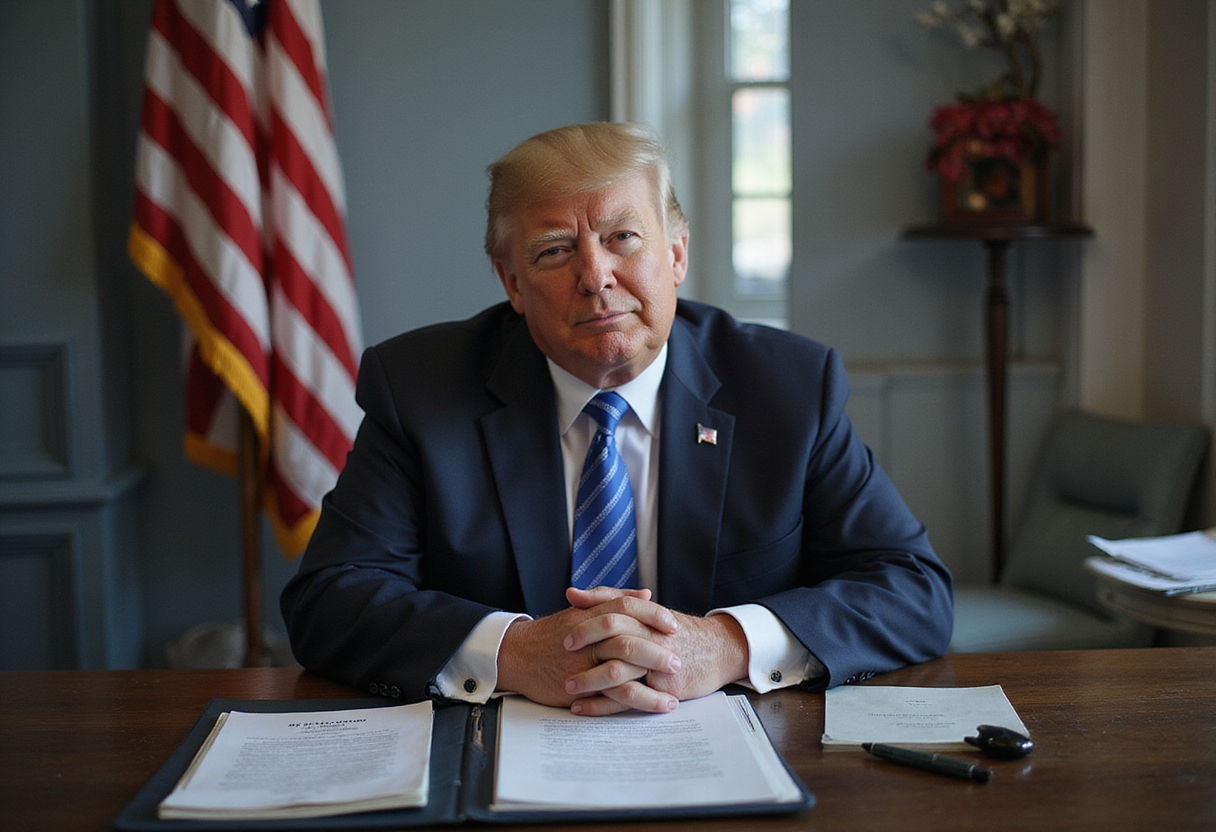
The U.S. Supreme Court upheld birthright citizenship on June 30, striking down President Donald Trump's executive order in a 6-3 decision — and constitutional law experts say the ruling leaves Congress no realistic way to end the policy through ordinary legislation, despite the president's claim to the contrary.
Trump signed the executive order on the first day of his second term, January 2025, to deny citizenship to children born in the United States to parents present unlawfully or lawfully but only on temporary visas. Lower federal courts blocked the order, and it never took effect. The case, Trump v. Barbara, reached the Supreme Court, which ruled that the order violated the 14th Amendment.
The 14th Amendment, ratified in 1868, states: "All persons born or naturalized in the United States, and subject to the jurisdiction thereof, are citizens of the United States and the State wherein they reside." Chief Justice John Roberts, writing for the majority, described citizenship as "the right to have rights" and said the amendment's Framers extended that promise to "every free-born person in this land." He explicitly included "children born of parents unlawfully or temporarily present in the United States." Under the Constitution, he wrote, "they are citizens at birth."
Shortly after the ruling, Trump wrote on Truth Social that Congress could "easily" end birthright citizenship through legislation. "No long and unwieldy Constitutional Amendment is necessary!" he posted, urging Congress to "start TODAY." He offered his "Complete and Total Support."
Trump is right about one hurdle. A constitutional amendment requires a two-thirds majority in both the House and the Senate, followed by ratification by three-fourths of the states. But constitutional and immigration law experts say that after the June 30 ruling, an amendment is now the only realistic path.
"There is no language in the majority opinion in Barbara that suggests Congress could change the birthright citizenship rule of the Fourteenth Amendment by statute," Garrett Epps, a professor of practice at the University of Oregon School of Law, said by email. "Nothing—nothing—in the majority opinion suggests that Congress has the power to limit or abolish" birthright citizenship, Epps said, adding that as of today five justices on the court hold that the Citizenship Clause establishes a constitutional rule Congress cannot overturn.
Muzaffar Chishti, a lawyer and senior fellow at the Migration Policy Institute and director of its office at the New York University School of Law, said Trump is "wrong" that legislation could reverse the policy. "He lost this one plain and simple!" Chishti said. "The majority, in an extraordinarily strong opinion by the Chief Justice, ruled that only a constitutional amendment can reinterpret the current understanding of the 14th amendment: that every child (with the minor exceptions of children born to diplomats and enemy aliens) are citizens at birth."
Jorge Loweree of the American Immigration Council agreed. "The Supreme Court did not say Congress can end birthright citizenship through legislation," he said. "If Congress enacted a statute that conflicted with the Court's interpretation of the Fourteenth Amendment, it would face immediate constitutional challenges. Unless the Supreme Court changes its interpretation in a future case, Congress cannot override the Constitution by statute."
One voice on the court left the door slightly open. Justice Brett Kavanaugh concurred with the majority only in part and wrote separately that Congress alone has the authority to "enact new legislation establishing exceptions to birthright citizenship for children born to foreign citizens unlawfully or temporarily in the country." Epps noted that Kavanaugh's was "the only voice of the nine" raising that possibility. Evelyn Cruz, a professor and director of the immigration clinic at Arizona State University's law school, said Kavanaugh's suggestion "stands on thin ice," though it may keep the issue politically viable.
Two prominent Republicans who oppose birthright citizenship also read the decision as requiring an amendment. Florida Governor Ron DeSantis wrote on X that the ruling was "a substantive decision" and that changing it will require "either a constitutional amendment or a future court to overrule this." Senator Mike Lee of Utah wrote: "The long fight for a constitutional amendment begins now."
Some narrower congressional actions remain on the table. Andrew Arthur, a resident fellow at the Center for Immigration Studies, said Congress could restrict nonimmigrant entry of pregnant women, crack down on birth tourism, or limit the ability of birthright citizens to petition for family members. Michelle Mittelstadt, director of communications at the Migration Policy Institute, said there are "means, short of tampering with the Constitution, to tackle what is without doubt immigration fraud," referring to birth tourism enforcement. The Center for Immigration Studies estimates birth tourism may account for over 20,000 births per year, though no direct government data exist.
But Samuel Breidbart, counsel in the Democracy Program at the Brennan Center for Justice, said any statutory narrowing of who qualifies for birthright citizenship would fall unless a future Supreme Court reversed the opinion. "There are five votes that said firmly, unequivocally that birthright citizenship is part of the Constitution, and that's the law," Breidbart said. "We require a constitutional amendment to change that."
For now, children born on U.S. soil remain citizens at birth under the Constitution, and the official ruling is published on the Supreme Court's website. Families with individual questions about citizenship should consult the official guidance of U.S. Citizenship and Immigration Services or a qualified immigration attorney.
via supremecourt.gov (Original)
More from Priya Raman
Show full bio
Market editor covering industry trends and analytics at Passport File.
127 articles