Borders & EnforcementEntry PF-886490 · Page 11 · Stamped NOV 08, 2026
The Morocco-Algeria border railway has stood idle for 30 years
A dirt-bike journey along the abandoned Morocco-Algeria border railway reveals a barbed-wire fence, official checks and wary comments about relations between the two countries on the ground.
- Programme
- Borders & Enforcement
- Filed
- Reading
- 3 min
Entry details
- No train has travelled on the Morocco-Algeria border railway for 30 years.
- The reporters sighted the border fence from about 100 metres away.
- The line runs toward Maghnia, an Algerian city 10 kilometres away, and then toward Oran.
- The railway entered service in the late 19th century; France established a protectorate in 1912.
- A Moroccan gendarmerie captain and two adjutants checked identification and contacted the General Directorate for National Security.
By Marcus Bennett
No train has travelled on the railway track running across the border between Morocco and Algeria for 30 years.
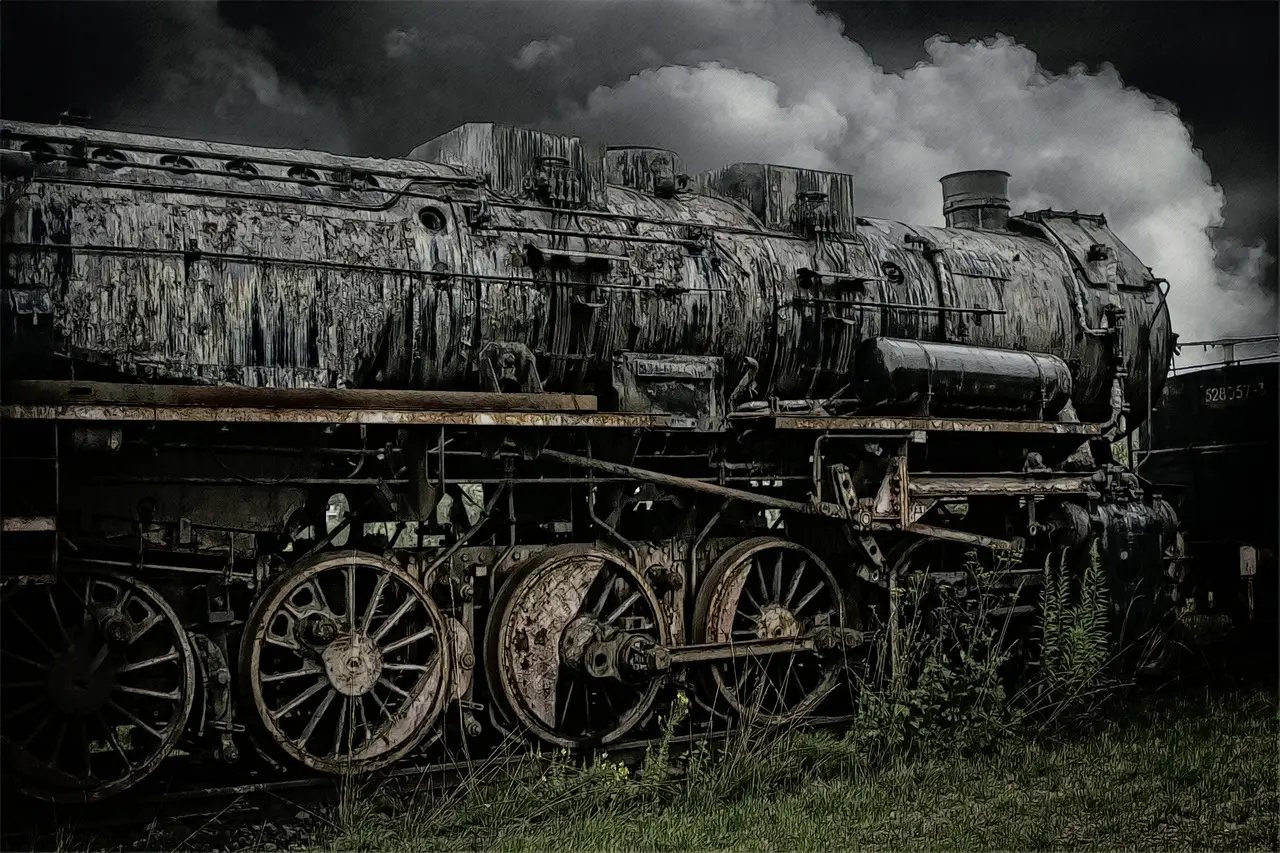
The line cuts through northeastern Morocco, but it no longer provides a rail crossing. Half buried and often hidden by thorny bushes, the track runs beside a rough trail that the reporting team needed a dirt bike to negotiate.
A few kilometres north of Oujda, the capital of the Oriental region, the team followed that trail toward the Algerian frontier. Beyond the last farm, the plain appeared empty. No shepherds grazed their sheep.
From about 100 metres away, the border came into view: a sturdy metal fence topped with barbed wire. A wide trench lay behind it, with Algeria on the far side. The fortifications gave the crossing a severe, forbidding appearance.
A man in uniform suddenly emerged from behind an embankment. He demanded to know what the team was doing there and said that it was not allowed. Dressed in motorcycle gear, the reporters hoped they might pass for lost tourists.
The reporters turned back. The railway track continued toward Maghnia, an Algerian city 10 kilometres away, and then toward Oran. Although the line had been silent for three decades, the area around it was not unguarded.
A Moroccan gendarmerie van soon forced the team to dismount. A captain with a stern moustache stepped out, flanked by two adjutants. The officers checked the reporters’ identification and telephoned the General Directorate for National Security.
The checks continued long enough for the team to question the younger adjutant. Asked whether Algerians were enemies, he replied: “Oh no, they’re our brothers! But the trouble is they don’t like us”.
He then cited the African Cup of Nations final, which Rabat hosted that January. Algerians had supported Senegal in the match. One reporter answered that the remark did not sound friendly.
Once the captain completed the checks, he returned the papers. “Welcome to Morocco!” he called over his shoulder before getting back into the vehicle. From that point, Moroccan police kept the reporting team under surveillance for the remainder of its work.
What does the journey show about movement at the border?
The trip shows that the frontier combined physical barriers with administrative checks. The team encountered a uniformed man, then a Moroccan gendarmerie captain and two adjutants, who checked identification and called the General Directorate for National Security. The team could not continue freely along the track toward Maghnia and Oran.
The railway’s history gives the present border another layer. The line through the region entered service in the late 19th century to facilitate French penetration into Morocco. France established a protectorate there in 1912. The abandoned track remains visible along the frontier long after independence.
The contrast between the officers’ words and actions shaped the journey. The younger adjutant described Algerians as brothers, then cited Algerian support for Senegal in a football final that January. The captain welcomed the team, yet the team remained watched throughout its reporting.
The border in this account functions as both a physical and administrative barrier. A track toward Maghnia and Oran meets barbed wire, a trench and an enforced stop. For the reporters, the route showed how neighbourly relations shape movement on the ground.
via mondediplo.com (Source)
More from Marcus Bennett
Show full bio
Staff writer covering money, funding and market shifts around Immigration and mobility policy worldwide at Passport File.
357 articles